Featured

Geographies of the creative past

A case study of the Bill Douglas Museum

Header image: Bill Douglas 1972, (The Scotsman, 2011)

Within Exeter University’s Streatham campus, lays a hidden gem that many are unaware of. The Bill Douglas Cinema Museum (BDCM) is both a public museum and an academic research facility, providing resources for students within, and outside of the campus (Bdcmuseum.org.uk, 2020). A British filmmaker of the past, described as innovative and unique, Bill Douglas remains an important figure in British cinema today, both through the legacy he inspired through this museum, and the importance of the film industry in today’s creative industries. Recently,  there is also a growing recognition of his work (Bdcmuseum.org.uk, 2020). It is undeniable that the film industry has developed throughout history, however, how could we explore this without creating a sterile timeline of progression?

The Bill Douglas cinema museum. Source: (Bdcmuseum.org.uk, 2020). 

Through this museum, we can begin to understand new ways of approaching the creative economy. Within geography there are links to the cultural economies (Gibson and Kong, 2005) that add different interpretations. Much as cultural economies are a multifaceted subject, as is geography. As geographers, one of these interpretations is that looking back is just as important as looking forward. Understanding the past can show us how things have developed, as well as gain an understanding of contemporary issues, and has been used as such within geographical studies (Wolch and Philo, 2000), (Gregory and Healey, 2007) (Sauder, 1980). 


The BDCM is an example of this past-present connection. Douglas’s work (dating from 1972) is still present in the industry, the museum itself works as a community for researchers and is an example of a past industry that has developed into a contemporary one. Rather than focusing on how his work was important then, we can start to discuss the processes in which his work continues to be important in shaping contemporary economies. Geography allows us to take a focused approach on why these things are important, showing the significance of the process of development.
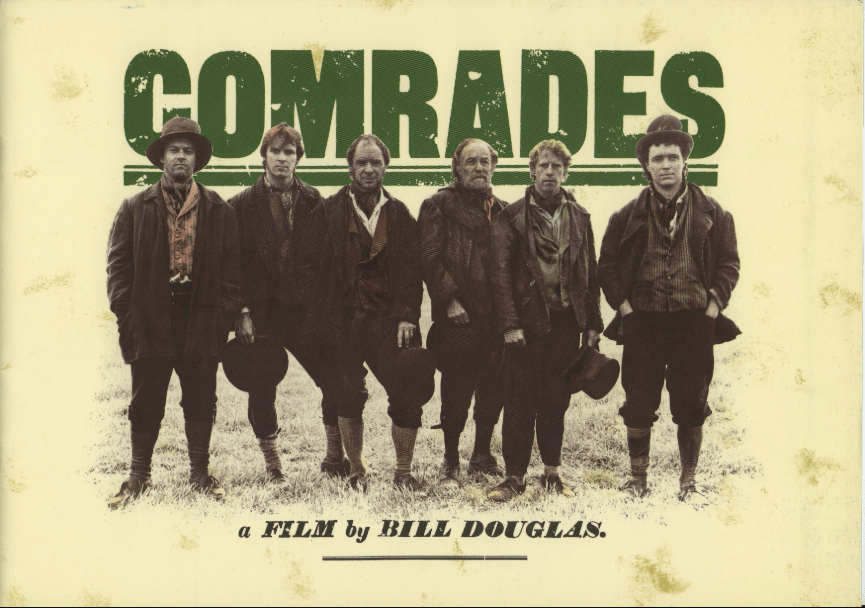
Comrades, a popular Bill Douglas film. Source: (Twitter, 2016)

There is also a need to understand what helps to enable creativity and shape the creative economy. In this context, we’re looking at how Douglas’s past enables creativity and development today. The museum, as a creative venue, has been used and promoted through influential film critics and academic talks (Bdcmuseum.org.uk, 2020). This infrastructure has allowed sharing of knowledge and promotion of film history, enabling its development. 

Geographers have therefore come to understand that cultural industries can rely heavily on the successful maintenance of infrastructure that support their work, thus places in which this is possible can seem to cluster in certain areas (Bassett, Griffiths and Smith, 2002). The museum has therefore been used as a springboard to inspire new discussions around the film industry, and support work within it, using Douglas’s work as a kickoff for these discourses. 

Through the lens of a geographer, different perspectives can be explored of the creative industry. From exploring this creative hub, it is undeniable that the past can help us to find the true value of these venues. 

Some other useful links: 

References

Bassett, K., Griffiths, R. and Smith, I. (2002). Cultural industries, cultural clusters and the city: the example of natural history film-making in Bristol. Geoforum, 33(2), pp.165-177.

Bdcmuseum.org.uk. (2020). Home – The Bill Douglas Cinema Museum. [online] Available at: https://www.bdcmuseum.org.uk/ [Accessed 6 Feb. 2020].

Gibson, C. and Kong, L. (2005). Cultural economy: a critical review. Progress in Human Geography, [online] 29(5), pp.541-561. Available at: https://journals.sagepub.com/doi/pdf/10.1191/0309132505ph567oa.

Gregory, I. N. and Healey, R. G. (2007) ‘Historical GIS: structuring, mapping and analysing geographies of the past’, Progress in Human Geography, 31(5), pp. 638–653. doi: 10.1177/0309132507081495.

Robert A. Sauder (1980) The use of Sanborn maps in reconstructing “geographies of the past”; Boston’s waterfront from 1867 to 1972, Journal of Geography, 79:6, 204-213, DOI: 10.1080/00221348008980649

The Scotsman (2011). Bill Douglas in Edinburgh in 1972. [image] Available at: https://www.scotsman.com/news-2-15012/shooting-star-the-untold-story-of-the-cinematic-genius-that-was-bill-douglas-1-1904232 [Accessed 6 Feb. 2020].

 Twitter (2016). Bill Douglas’s amazing Comrades. [image] Available at: https://twitter.com/bdcmuseum/status/724879623637585921 [Accessed 6 Feb. 2020].

 Wolch, J. and Philo, C. (2000). From distributions of deviance to definitions of difference: past and future mental health geographies. Health & Place, 6(3), pp.137-157.

The Creative Geographies of Labour

Figure one: (Raindance, 2020).

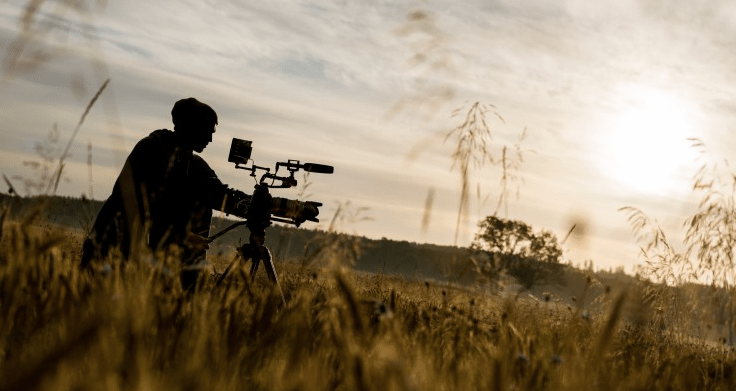
There is an undeniably large amount of labour involved in the film industry, from the actors, to the screen directors, to the prop makers. Creative labour is behind every creative industry, it is the risks, the work and the managing that goes before the product. This last blog on geographies of the creative economy, maintaining the theme of film, will discuss the creative labour of the film industry, looking at examples such as the film industry in Sweden to discuss how economic geographers can discuss creative labour in relation to place, to discuss how creative labour is linked and can be explored through geographical location.

Figure two: (Studiobinder, 2020)

When we imagine the term geography, most commonly we define and associate this as geographical location. Geographical location has been used to discuss economics, politics and relevant to this blog, the creative industries. Creative labour has connotations to place, due to the nature of social networks and the need for a local labour force to help creative industries to exist. For example, Clare (2012) conducted a study discussing the role that geographical location played in creative labour, concluding that it was an essential element. This was due to the skillsets that workers needed and the social networks that led to clustering.

For economic geographers, the actual site and geographical location is a key area of enquiry of the labour behind the film industries. In particular Dahlström and Hermelin (2007) discuss the film industries in Sweden, stating that film production extends past its original site, and relies on networks over geographical locations. In terms of geographical location, there are also issues surrounding workforce, and if there is sufficient workforce with skillsets needed in the film industry. There are many labourers involved in film production, as well as competition for low labour costs, therefore the geographical location being filled with a labour force that is skilled and able to contribute towards the film industry is key. In this way, through the lens of a creative industries geographer, we can begin to understand how creative labour is affected by geographical location.

Figure three: (Nofilmschool, 2020).

The geographical place of the film industry is also affected by financial support. For example, Altaweel (2017) argues that because of financial support from states specifically can differ from location to location, this can dictate if film industries and labour can survive in certain areas and thrive or not. Therefore, looking at the geographical part of filmmaking can enlighten us to many different aspects of the labour of the film industry, and how this can be successful or not based on the locations they are based in.

Overall, this blog has explored how geographical location can have a significant effect on the creative labour of film, and that this can be explored through a geographical lens to offer a new insight into how location can affect the distribution of labour, its success, and why location is important to the labour of filmmakers in the creative industries.

References

Altaweel, M., 2017. Geography Of The Film Industry. [online] Geography Realm. Available at: <https://www.geographyrealm.com/geography-film-industry/&gt; [Accessed 25 April 2020].

Clare, K., 2012. The essential role of place within the creative industries: Boundaries, networks and play. Cities, 34, pp.52-57.

Dahlström, M & Hermelin, B (2007) Creative industries, spatiality and flexibility: The example of film production, Norsk Geografisk Tidsskrift – Norwegian Journal of Geography, 61:3, 111-121, DOI: 10.1080/00291950701553863

Figure three: Nofilmschool, 2020. Join Over 50K Filmmakers In The World’S Largest Online Cinematography Event…For Free!. [image] Available at: <https://nofilmschool.com/2015/06/join-over-50k-filmmakers-worlds-largest-cinematography-event-cinesummit&gt; [Accessed 25 April 2020].

Figure one: RainDance, 2020. Three Stunning Filmmaking Tutorials Every Aspiring Filmmaker Needs. [image] Available at: <https://www.raindance.org/three-stunning-

filmmaking-tutorials-every-aspiring-filmmaker-needs/> [Accessed 25 April 2020].

Figure two: StudioBinder, 2020. 8 Production Hacks For A 2Nd AD Shooting On Location. [image] Available at: <https://www.studiobinder.com/blog/8-production-hacks-for-2nd-ads-on-a-film-set/&gt; [Accessed 25 April 2020].

The creative Geographies of activism; Okja

figure one: (Huffingtonpost.co.uk,2017)

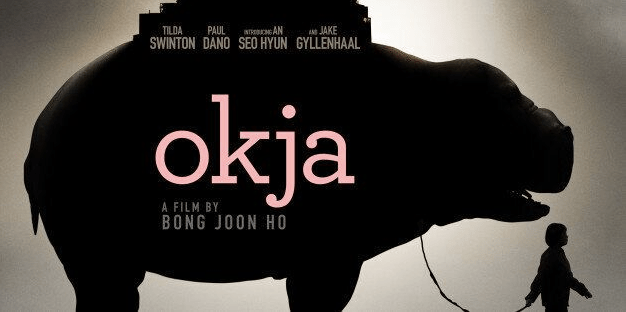
One of the beauties of art, is its ability to send a message through the most creative of ways. In this blog particularly, we will focus on how activism has been displayed through the creative industries. OKJA, a film produced and released on Netflix in 2017, is a representation of how creativity can be used as a form of activism. Okja was written to provoke questions about the morality of eating animals, through the portrayal of a film, a media traditionally proposed purely for entertainment. Through a geographical lens, we can begin to explore through this blog, how activism is portrayed in new and creative ways within the creative industries, through the example of the film Ojka, and how this has allowed a new and inventive way of shaping how and if people make a change. 

Okja is a film about a girl (Mija) growing up and forming a friendship with a genetically modified super-pig. This super-pig (Okja) is part of a corporate scheme to produce cheap meat, and the story shows the struggles the pig and her human friend face when Okja is taken away (Gilbey, 2017). Alongside Mija, the film shows an animal activist group Animal liberation front (AFL) in their attempts to rescue Okja. By showing the relationship of Okja and Mija and the ALF, you are encouraged to sympathise with this group, and this thereafter prompts you to think about the moral side of meat and eating animals. Creativity is a clever form of activism, because it allows artists to make us think about things without us really consciously knowing it. This in effect draws us in before we really know what we are being provoked to think. In the case of Okja, we are prompted to think about how moral it really is to eat animals. 

Figure two: (IMDb, 2017)

Okja provokes discussions of power-relations between animals and humans. For geographers, animals, ethics and power relations are an increasing topic for exploration (Lynn, 1998). Okja explores those power relations by provoking us to think about our relationship with animals. As demonstrated by Julie Urbanik (2012) a geographer who specialises in human-animal relations, geographers are interested in our relationship with animals and the environment, and how we can be of detriment to both. As well as animals and hierarchies, and why and how we place ourselves separately from them. Films therefore, such as Okja, that explore issues such as meat production in relation to moral and environmental issues, can be explored through a geographical animal-human lens.

Figure three: (Vice, 2017) (the activists)

Overall, Okja explores the difficult world of animal activism, but does this through a creative industry that allows us to subconsciously think about our actions and their consequences in a way that is far more personal and intimate. The relationships this film explores can be greater understood through the lens of a geographer, to discuss why these power relations have such an effect on us and can provoke activism. Therefore, proving the importance of the creative industries within making a change.  

References:

Figure one: Huffingtonpost.co.uk. 2017. Okja: The Heart-Warming Story That Exposes The Horrors Of The Meat Industry. [online] Available at: <https://www.huffingtonpost.co.uk/sarah-moyes/okja-the-heartwarming-story_b_17378994.html&gt; [Accessed 2 April 2020].

Figure three: Vice. 2017. ‘Snowpiercer’ Director’S New Movie ‘Okja’ Is An Anti-Corporate Mindfuck. [online] Available at: <https://www.vice.com/en_us/article/xw8e9j/okja-netflix-review-anti-corporate-mindfuck&gt; [Accessed 2 April 2020].

Figure two:  IMDb. 2017. Okja (2017) – Imdb. [online] Available at: <https://www.imdb.com/title/tt3967856/mediaindex&gt; [Accessed 2 April 2020].

Gilbey, R., 2017. Okja Director Bong Joon-Ho: ‘In Films, Animals Are Either Soulmates Or Butchered’. [online] the Guardian. Available at: <https://www.theguardian.com/film/2017/jun/16/okja-director-bong-joon-ho-in-films-animals-are-either-soulmates-or-butchered&gt; [Accessed 2 April 2020].

Lynn, W. S. 1998. Animals, Ethics and Geography, in Jennifer Wolch and Jody Emel (eds) Animal Geographies: Place, Politics and Identity in the Nature-Culture Borderlands, London: Verso, 280-298.

Urbanik, J., 2012. Placing Animals. Lanham: Rowman & Littlefield.

Creative Geographies and economies of place

Header image: (FodorsTravel, 2020).

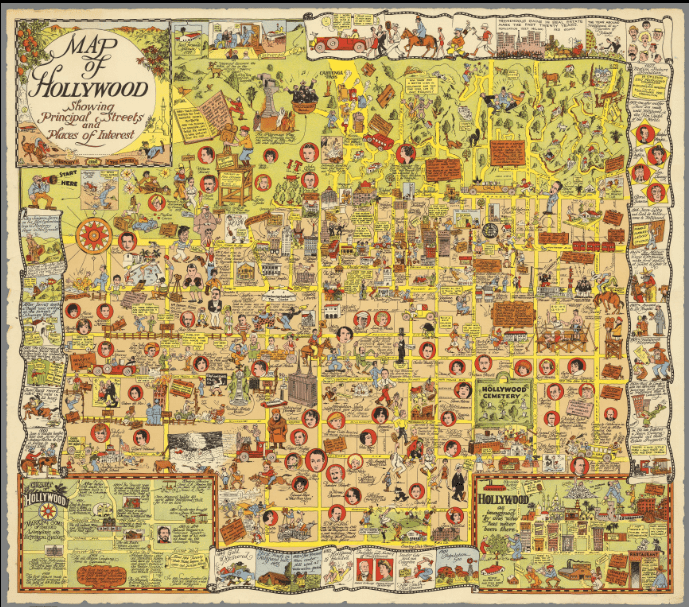
When we picture the place of film within the creative industry, we most commonly imagine Hollywood, it encapsulates the idea of place and film through its image, being known most prevalently for its film industry. Film is without a doubt linked within the creative industries, by using the example of a place of film (Hollywood) we can understand, through a geographical lens, how place is important within the creative industries and why. Apart from where film is made and where it is seen, what other aspects of the place of the film industry can we unpack?

source: (Earthlymission, 2020)

Geography has a longstanding relationship with visual culture and imaginaries (MacDonald, 2006). By looking through imaginaries, using the example of Hollywood, we can explore the importance of place within the creative industries. In his seminal work Orientalism, Edward Said argued that spatial imaginaries are ways of representing and talking about places (Said, 2003). These imaginaries are created and represented through images, such as film, and can shape how people see and understand certain places/spaces and people. Bleiker, (2018) a prominent visual geographer, also suggests that visuals can help shape our understanding of place.

Place is undoubtedly important in the creative industries and has been said to have made a significant difference to where these industries/people choose to situate themselves (Drake, 2003). By looking through the geographical lens of the perception of the ‘imagined’ Hollywood, we can begin to understand that, how people imagine this place to be, can have an effect on the creative industries it can attract.

Source: (WSUOnline, 2020)

Hollywood has benefited from the imagined ‘place’ of the film industry, many of its creative industries are based around this imaginary and its association with film. As a result, it is also attractive to tourists because of these factors, and therefore provides a flourishing and successful base for the creative industries.

Hollywood is not the only place that has shown this, for example, Les Roberts (2012) within his book on A Cinematic Geography of Liverpool’ discusses the power of the imagined within Liverpool. Suggesting that for some Liverpool is just a place, but for others, the imagined Liverpool conjures up images of the ‘city-film’, associated with the films and feature shots that were created there. Therefore, proving that through the geographical concept of the imagined, we can begin to understand how certain places attract creative industries, and can actively help to promote them.

So, we have explored, using the example of Hollywood, ways in which we can discuss the topic of place through a geographer’s lens. Once again, through the perspective of a geographer of the creative economy, we can understand the place of a creative industry in ways that transcend far further than the marking point on a map. 

References

Bleiker, R. 2018. ‘Mapping Visual Global Politics’ in R. Bleiker (ed) Visual Global Politics. Routledge, London.

Drake, G. (2003). ‘This place gives me space’: place and creativity in the creative industries. Geoforum, [online] 34(4), pp.511-524. Available at: https://www.sciencedirect.com/science/article/pii/S0016718503000290.

(Figure 2) EarthlyMission (2020). Cool Vintage Map of Hollywood. [image] Available at: https://www.earthlymission.com/cool-vintage-map-of-hollywood/ [Accessed 19 Feb. 2020].

(Figure 1) FodorsTravel (2020). Hollywood sign. [image] Available at: https://www.fodors.com/world/north-america/usa/california/los-angeles/experiences/news/the-once-and-future-hollywood-how-to-experience-tarantinos-golden-age-of-los-angeles [Accessed 19 Feb. 2020].

MacDonald, F. 2006. ‘Geopolitics and ‘the vision thing’: regarding Britain and America’s first nuclear missile’ Transactions of the Institute of British Geographers 31, 53-71

Roberts, L. (2012). Film, mobility and urban space: A Cinematic Geography of Liverpool. Liverpool: Liverpool University Press.

Said, E. (2003) Orientalism. Revised ed. London: Penguin Classics.

(Figure 3) WSUOnline (2020). Film Analysis. [image] Available at: https://weber.instructure.com/courses/423843/pages/film-analysis [Accessed 20 Feb. 2020].

Design a site like this with WordPress.com
Get started