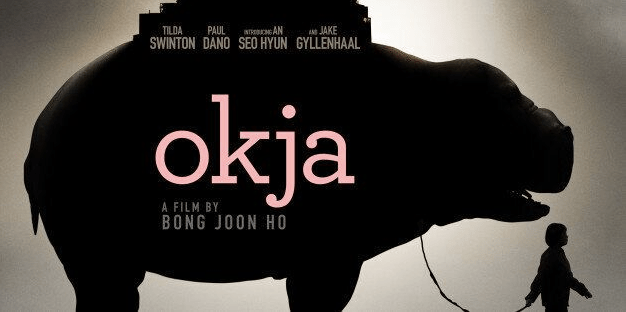
One of the beauties of art, is its ability to send a message through the most creative of ways. In this blog particularly, we will focus on how activism has been displayed through the creative industries. OKJA, a film produced and released on Netflix in 2017, is a representation of how creativity can be used as a form of activism. Okja was written to provoke questions about the morality of eating animals, through the portrayal of a film, a media traditionally proposed purely for entertainment. Through a geographical lens, we can begin to explore through this blog, how activism is portrayed in new and creative ways within the creative industries, through the example of the film Ojka, and how this has allowed a new and inventive way of shaping how and if people make a change.
Okja is a film about a girl (Mija) growing up and forming a friendship with a genetically modified super-pig. This super-pig (Okja) is part of a corporate scheme to produce cheap meat, and the story shows the struggles the pig and her human friend face when Okja is taken away (Gilbey, 2017). Alongside Mija, the film shows an animal activist group Animal liberation front (AFL) in their attempts to rescue Okja. By showing the relationship of Okja and Mija and the ALF, you are encouraged to sympathise with this group, and this thereafter prompts you to think about the moral side of meat and eating animals. Creativity is a clever form of activism, because it allows artists to make us think about things without us really consciously knowing it. This in effect draws us in before we really know what we are being provoked to think. In the case of Okja, we are prompted to think about how moral it really is to eat animals.
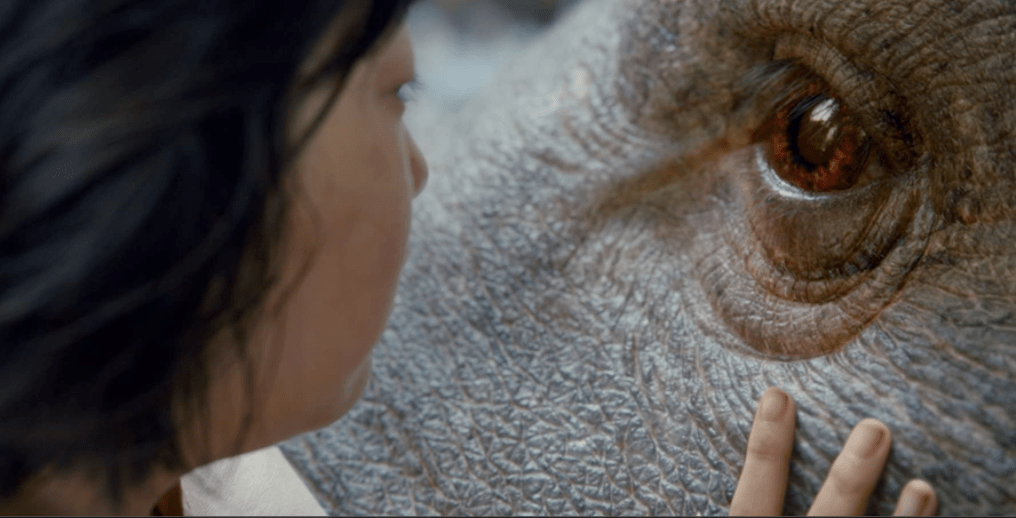
Okja provokes discussions of power-relations between animals and humans. For geographers, animals, ethics and power relations are an increasing topic for exploration (Lynn, 1998). Okja explores those power relations by provoking us to think about our relationship with animals. As demonstrated by Julie Urbanik (2012) a geographer who specialises in human-animal relations, geographers are interested in our relationship with animals and the environment, and how we can be of detriment to both. As well as animals and hierarchies, and why and how we place ourselves separately from them. Films therefore, such as Okja, that explore issues such as meat production in relation to moral and environmental issues, can be explored through a geographical animal-human lens.
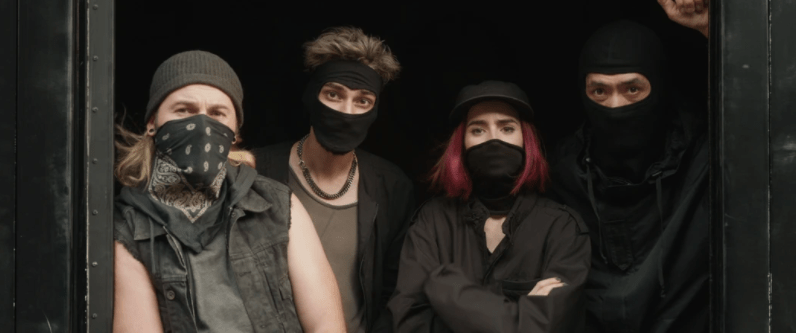
Overall, Okja explores the difficult world of animal activism, but does this through a creative industry that allows us to subconsciously think about our actions and their consequences in a way that is far more personal and intimate. The relationships this film explores can be greater understood through the lens of a geographer, to discuss why these power relations have such an effect on us and can provoke activism. Therefore, proving the importance of the creative industries within making a change.
References:
Figure one: Huffingtonpost.co.uk. 2017. Okja: The Heart-Warming Story That Exposes The Horrors Of The Meat Industry. [online] Available at: <https://www.huffingtonpost.co.uk/sarah-moyes/okja-the-heartwarming-story_b_17378994.html> [Accessed 2 April 2020].
Figure three: Vice. 2017. ‘Snowpiercer’ Director’S New Movie ‘Okja’ Is An Anti-Corporate Mindfuck. [online] Available at: <https://www.vice.com/en_us/article/xw8e9j/okja-netflix-review-anti-corporate-mindfuck> [Accessed 2 April 2020].
Figure two: IMDb. 2017. Okja (2017) – Imdb. [online] Available at: <https://www.imdb.com/title/tt3967856/mediaindex> [Accessed 2 April 2020].
Gilbey, R., 2017. Okja Director Bong Joon-Ho: ‘In Films, Animals Are Either Soulmates Or Butchered’. [online] the Guardian. Available at: <https://www.theguardian.com/film/2017/jun/16/okja-director-bong-joon-ho-in-films-animals-are-either-soulmates-or-butchered> [Accessed 2 April 2020].
Lynn, W. S. 1998. Animals, Ethics and Geography, in Jennifer Wolch and Jody Emel (eds) Animal Geographies: Place, Politics and Identity in the Nature-Culture Borderlands, London: Verso, 280-298.
Urbanik, J., 2012. Placing Animals. Lanham: Rowman & Littlefield.
 Geographies Of The Creative Industries