A case study of the Bill Douglas Museum
Header image: Bill Douglas 1972, (The Scotsman, 2011)
Within Exeter University’s Streatham campus, lays a hidden gem that many are unaware of. The Bill Douglas Cinema Museum (BDCM) is both a public museum and an academic research facility, providing resources for students within, and outside of the campus (Bdcmuseum.org.uk, 2020). A British filmmaker of the past, described as innovative and unique, Bill Douglas remains an important figure in British cinema today, both through the legacy he inspired through this museum, and the importance of the film industry in today’s creative industries. Recently, there is also a growing recognition of his work (Bdcmuseum.org.uk, 2020). It is undeniable that the film industry has developed throughout history, however, how could we explore this without creating a sterile timeline of progression?

Through this museum, we can begin to understand new ways of approaching the creative economy. Within geography there are links to the cultural economies (Gibson and Kong, 2005) that add different interpretations. Much as cultural economies are a multifaceted subject, as is geography. As geographers, one of these interpretations is that looking back is just as important as looking forward. Understanding the past can show us how things have developed, as well as gain an understanding of contemporary issues, and has been used as such within geographical studies (Wolch and Philo, 2000), (Gregory and Healey, 2007) (Sauder, 1980).
The BDCM is an example of this past-present connection. Douglas’s work (dating from 1972) is still present in the industry, the museum itself works as a community for researchers and is an example of a past industry that has developed into a contemporary one. Rather than focusing on how his work was important then, we can start to discuss the processes in which his work continues to be important in shaping contemporary economies. Geography allows us to take a focused approach on why these things are important, showing the significance of the process of development.
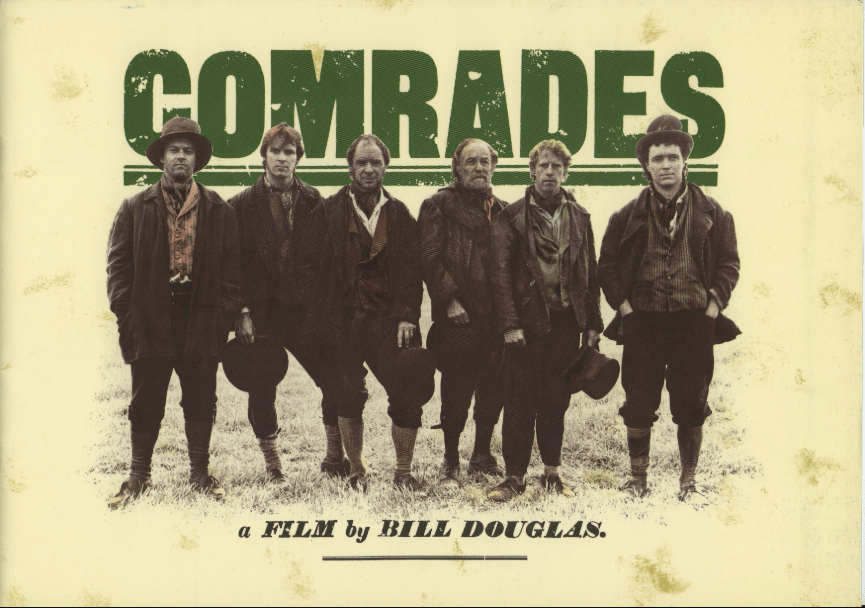
There is also a need to understand what helps to enable creativity and shape the creative economy. In this context, we’re looking at how Douglas’s past enables creativity and development today. The museum, as a creative venue, has been used and promoted through influential film critics and academic talks (Bdcmuseum.org.uk, 2020). This infrastructure has allowed sharing of knowledge and promotion of film history, enabling its development.
Geographers have therefore come to understand that cultural industries can rely heavily on the successful maintenance of infrastructure that support their work, thus places in which this is possible can seem to cluster in certain areas (Bassett, Griffiths and Smith, 2002). The museum has therefore been used as a springboard to inspire new discussions around the film industry, and support work within it, using Douglas’s work as a kickoff for these discourses.
Through the lens of a geographer, different perspectives can be explored of the creative industry. From exploring this creative hub, it is undeniable that the past can help us to find the true value of these venues.
Some other useful links:
References
Bassett, K., Griffiths, R. and Smith, I. (2002). Cultural industries, cultural clusters and the city: the example of natural history film-making in Bristol. Geoforum, 33(2), pp.165-177.
Bdcmuseum.org.uk. (2020). Home – The Bill Douglas Cinema Museum. [online] Available at: https://www.bdcmuseum.org.uk/ [Accessed 6 Feb. 2020].
Gibson, C. and Kong, L. (2005). Cultural economy: a critical review. Progress in Human Geography, [online] 29(5), pp.541-561. Available at: https://journals.sagepub.com/doi/pdf/10.1191/0309132505ph567oa.
Gregory, I. N. and Healey, R. G. (2007) ‘Historical GIS: structuring, mapping and analysing geographies of the past’, Progress in Human Geography, 31(5), pp. 638–653. doi: 10.1177/0309132507081495.
Robert A. Sauder (1980) The use of Sanborn maps in reconstructing “geographies of the past”; Boston’s waterfront from 1867 to 1972, Journal of Geography, 79:6, 204-213, DOI: 10.1080/00221348008980649
The Scotsman (2011). Bill Douglas in Edinburgh in 1972. [image] Available at: https://www.scotsman.com/news-2-15012/shooting-star-the-untold-story-of-the-cinematic-genius-that-was-bill-douglas-1-1904232 [Accessed 6 Feb. 2020].
Twitter (2016). Bill Douglas’s amazing Comrades. [image] Available at: https://twitter.com/bdcmuseum/status/724879623637585921 [Accessed 6 Feb. 2020].
Wolch, J. and Philo, C. (2000). From distributions of deviance to definitions of difference: past and future mental health geographies. Health & Place, 6(3), pp.137-157.
 Geographies Of The Creative Industries